

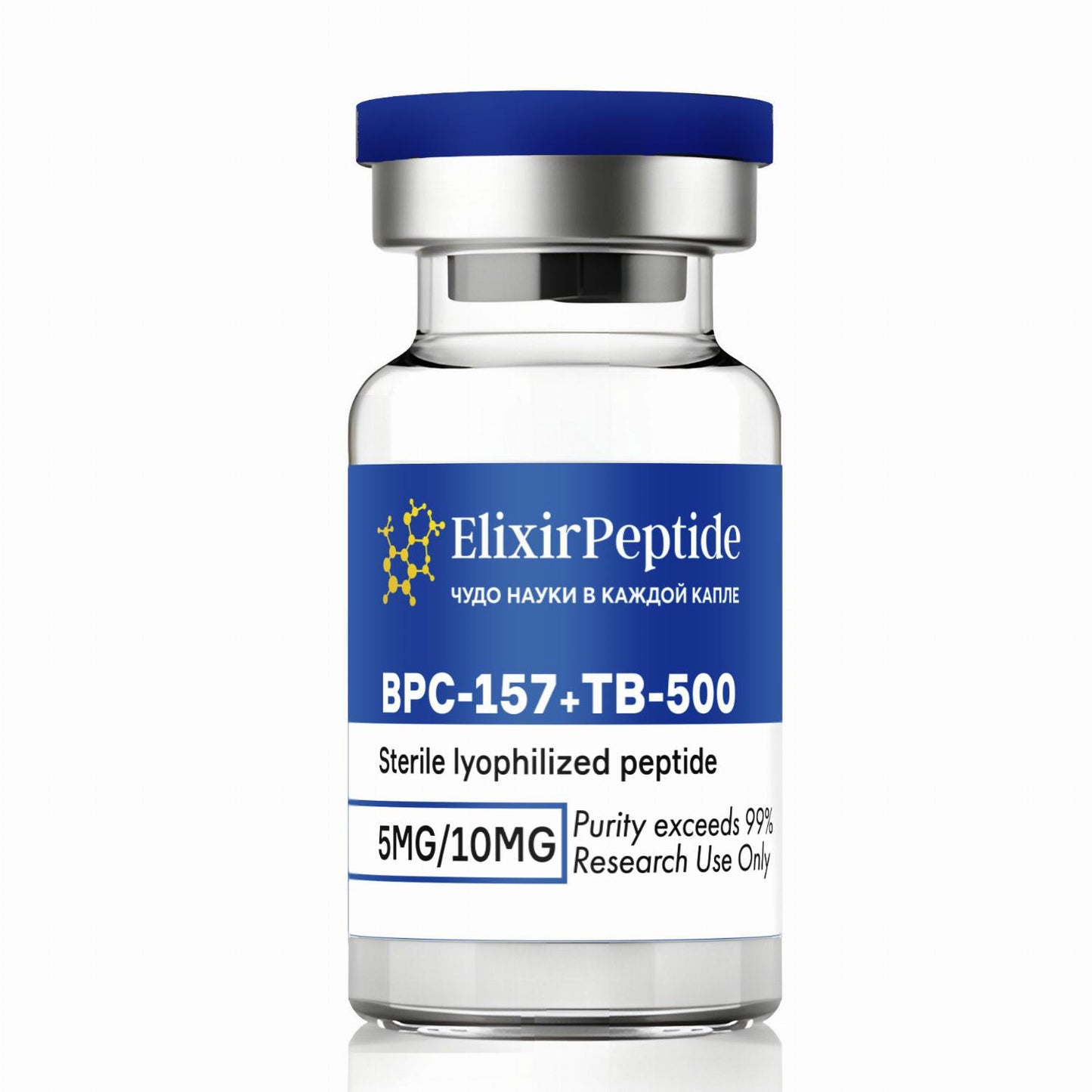
BPC-157+TB-500 10mg+10mg
BPC-157+TB-500 10mg+10mg
Couldn't load pickup availability
BPC-157
BPC-157 consists of 15 amino acids and is a synthetic analogue of a fragment of a gastric juice protein. Its uniqueness lies in its high ability to stimulate angiogenesis, accelerate tendon and muscle healing, and protect the gastric and intestinal mucosa.
Purity: 99.4%
Amino acid sequence: Gly-Glu-Pro-Pro-Pro-Gly-Lys-Pro-Ala-Asp-Asp-Ala-Gly-Leu-Val
Molecular formula: C62H98N16O22
Molecular weight: 1419.5 Da
TB-500
TB-500 is a synthetic form of a fragment of thymosin beta-4, consisting of 43 amino acids. It is unique in its ability to stimulate cell migration, accelerate connective tissue repair, and reduce fibrosis, which is especially important in injuries and fractures.
Purity: 99.4%
Amino acid sequence: AC-LEU-LYS-LYS-THR-GLU-THR-GLN-OH
Molecular formula: C38H68N10O14
Molecular weight: 889 Da
Why they work together
Combined use of BPC-157 and TB-500 enhances the effect of each component: BPC-157 stimulates angiogenesis and mucosal protection, while TB-500 accelerates cell migration and reduces fibrosis. Together, they create a powerful synergistic effect, allowing recovery more quickly from injuries, athletic activity, and even fractures.
Main possible effects (BPC-157 + TB-500)
| Mechanism of action | BPC-157 | TB-500 |
| Inflammation modulation | Regulation of pro-inflammatory cytokines (TNF-α, IL-6) | Decreased neutrophil activation |
| Angiogenesis | Activation of VEGF and endothelial proliferation | Increased migration of endothelial cells |
| Tissue regeneration | Stimulation of fibroblasts and collagenogenesis | Activation of the actin cytoskeleton |
| Neuroprotection | Supports peripheral nerve recovery | Potential regeneration of myelin sheaths |
| Recovery from fractures | Accelerates the formation of bone callus and mineralization | Reduces fibrosis and stimulates cell migration to restore bone tissue |
What aspects of health can it support?
The BPC-157+TB-500 combination is used for:
- Muscle and connective tissue restoration;
joint, ligament, and tendon support. - Protection of the gastric and intestinal mucosa
- Accelerated recovery from fractures, injuries, and physical exertion
- Support of nerve tissue and peripheral innervation.
Comparison with similar peptides and telomerase activators
Unlike single peptides, the BPC-157+TB-500 combination simultaneously affects several biological cascades. Compared to telomerase activators, this complex does not directly affect telomeres, but provides more pronounced local and systemic tissue regeneration. This is why BPC-157+TB-500 is preferred for comprehensive support of injury recovery.
Research and Expert Publications (Scientific Sources)
Preclinical studies of BPC-157 have shown accelerated healing of tendons, muscle tissue, and bone by enhancing angiogenesis and activating NO signaling pathways. TB-500 has demonstrated in vivo ability to accelerate cell migration, reduce fibrosis, and improve connective tissue repair, including after fractures.
Combination is being studied as a model for synergistic effects on tissue regeneration, inflammation, and repair.
Side Effects and Important Warnings
When administered at the correct dosage, BPC 157 and TB 500 are generally well tolerated. However, individual reactions are possible.
- Temporary redness or discomfort at the injection site
- Mild soreness or burning sensation
- Rarely, short-term headaches or fatigue
- Individual intolerance to the components
Important: All side effects are usually temporary and resolve spontaneously. Use of BPC 157 and TB 500 should be strictly used for research purposes only.
Legal and Ethical Disclaimer
Peptides are classified as research compounds. Use of peptides are strictly for research purposes only.
List of Scientific Literature and Sources
Review of BPC-157 data in the context of musculoskeletal healing
A review of the biological activity and patents of the BPC-157 peptide
A scoping review of the use of thymosin beta-4/TB-500 in tissue healing